Black History Month has ended, but showing up for each other hasn’t. Here’s why Black heritage blood donors matter so much, and how to check if you can give.
New: want the full picture? Read our sickle cell guide, covering trait and genotype, signs, screening and treatment.
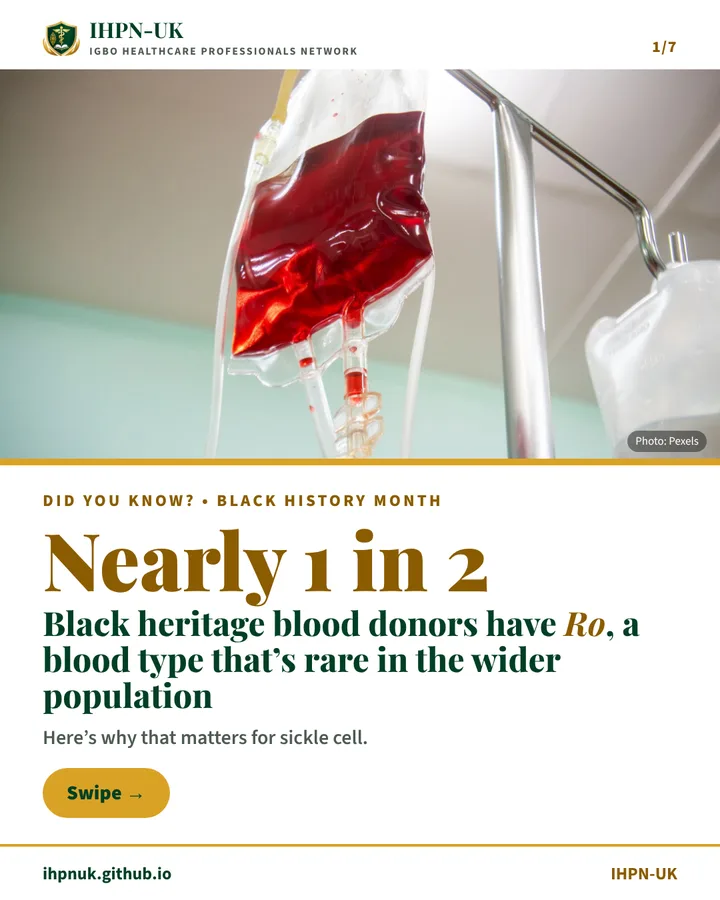
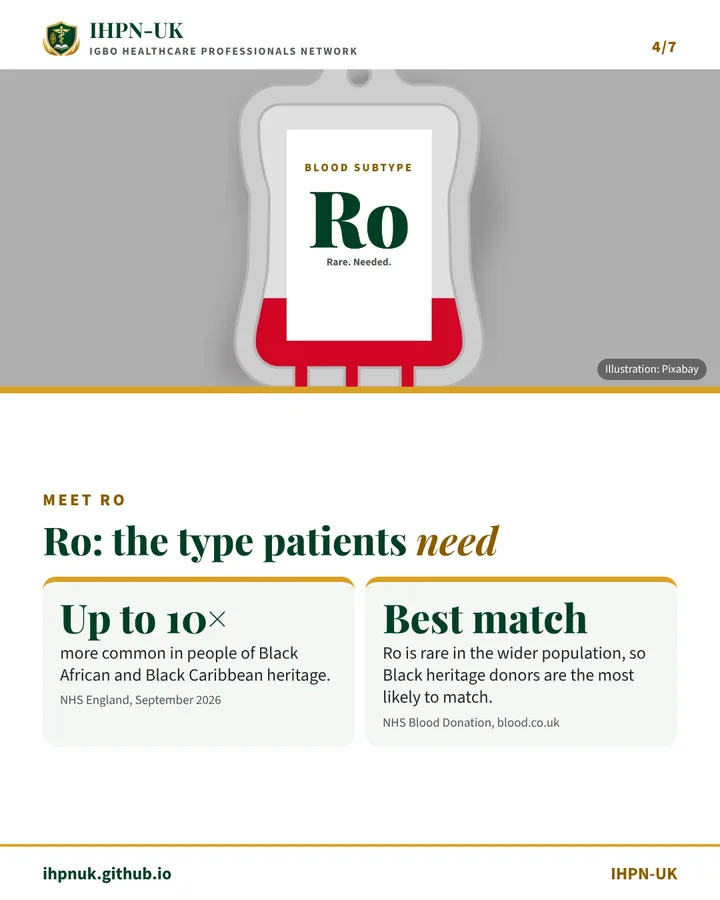
Nearly 1 in 2 Black heritage donors have Ro
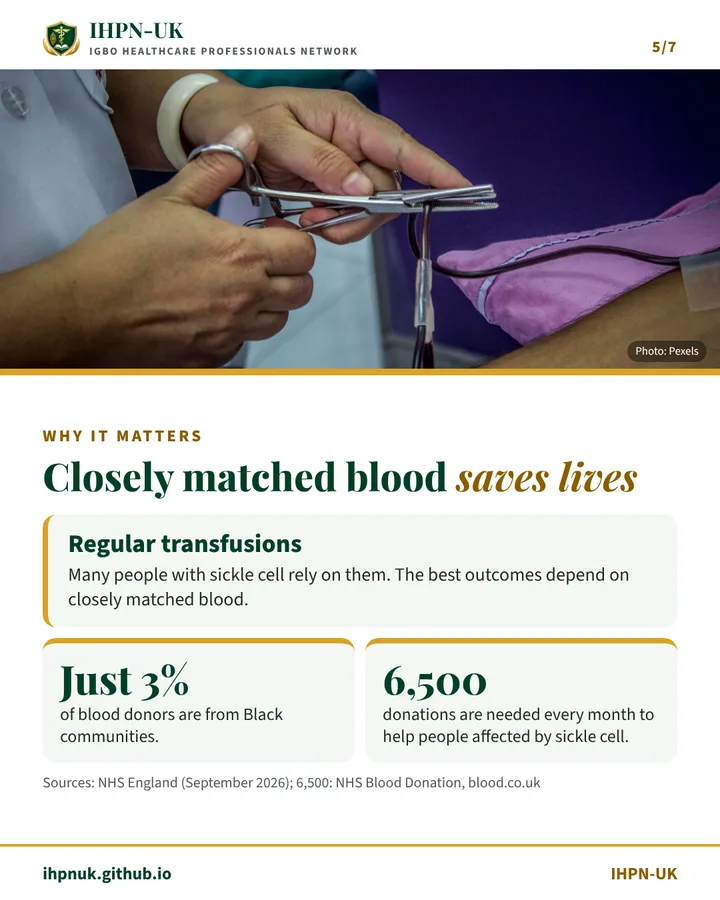
Ro is a blood subtype that’s rare in the wider population. Many people with sickle cell need regular transfusions of closely matched blood, and Black heritage donors are the most likely to be a match.
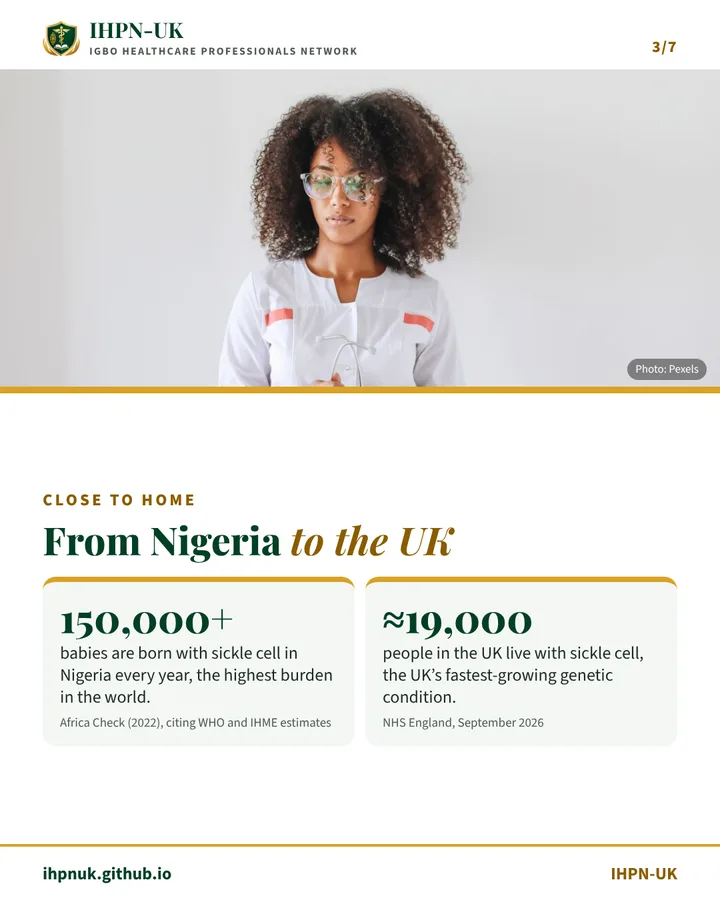
150,000+babies born with sickle cell in Nigeria every year
≈19,000people living with sickle cell in the UK
Just 3%of blood donors are from Black communities
The carousel
Swipe or scroll sideways to see all 7 slides.
Watch: one donation, real impact
Our 52-second video on Ro, sickle cell and why your blood could be the match someone needs. Captions are on. The voiceover is a synthetic voice, and the footage is stock B-roll.
Read the video transcript
Voiceover: Did you know nearly one in two Black heritage donors have a blood subtype called Ro? It’s rare in the wider population, and many people with sickle cell need it. Sickle cell is an inherited condition that affects red blood cells. In Nigeria, at least 150,000 babies are born with it every year. In the UK, about 19,000 people live with it. Yet just three in every hundred blood donors are from Black communities. Check if you can give blood. Your local service is on screen. As Black History Month ends, history is made by people who show up for each other. Have you given blood? Tell us below, and follow the Igbo Healthcare Professionals Network, IHPN-UK.
On screen: animated red blood cells and hospital footage, with the key numbers shown as large text (nearly 1 in 2, 150,000+, about 19,000, just 3%) and their sources; the four give-blood websites (blood.co.uk, scotblood.co.uk, welsh-blood.org.uk, nibts.org); and an end card with the Igbo Healthcare Professionals Network (IHPN-UK) name, crest and ihpnuk.github.io.
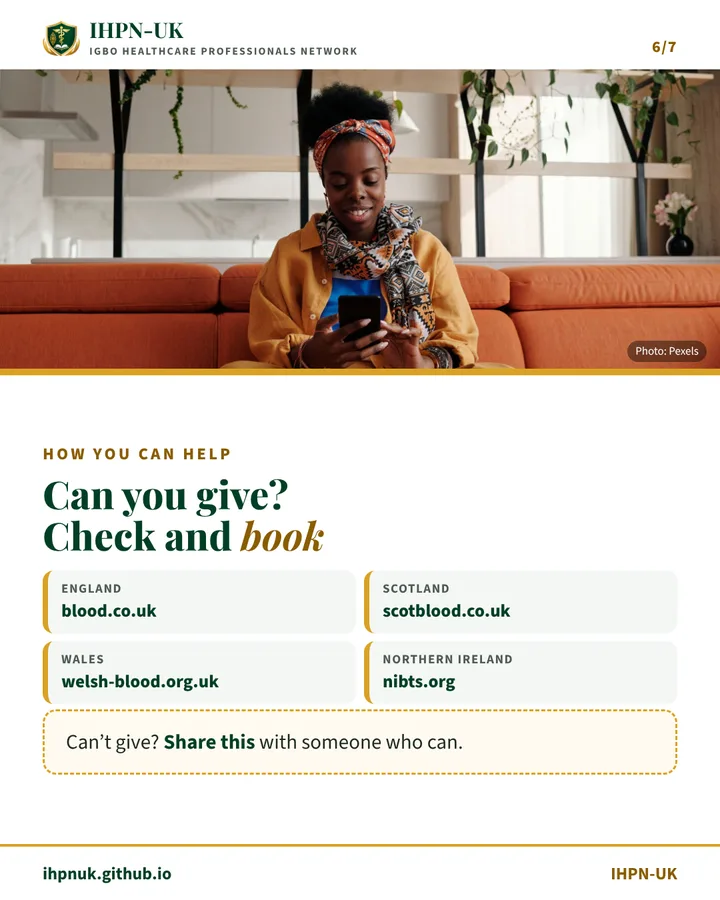
Check if you can give blood
Most healthy adults can give. Each service has a quick eligibility check and online booking.
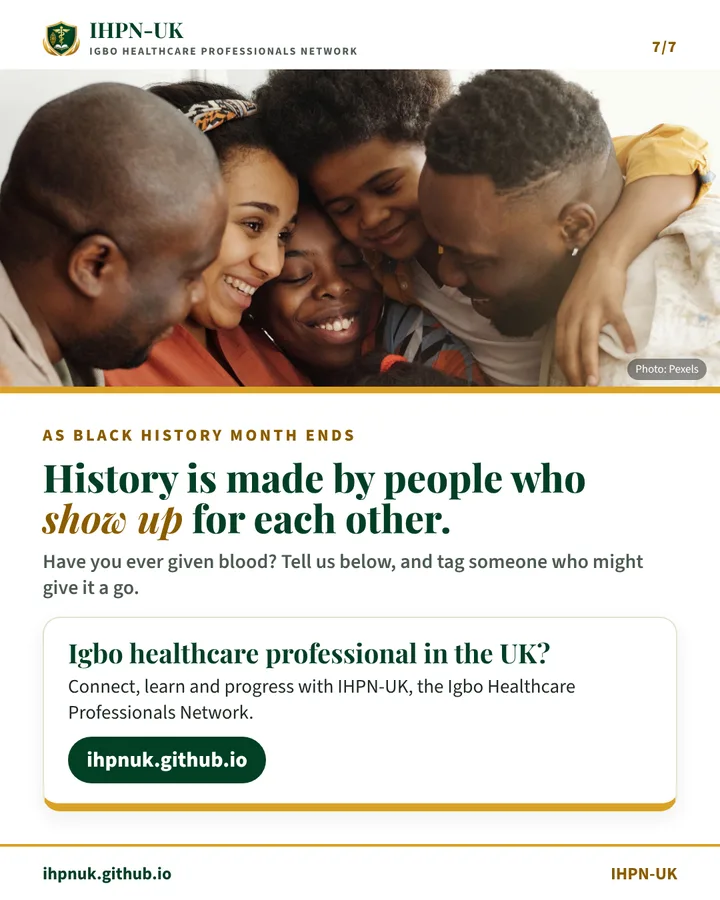
Members hear about our talks, events and opportunities, including our mental health talk, planned for Sunday 22 November. You can ask questions and get support in our members’ group, and connect with Igbo healthcare professionals across the UK.
Membership is open to healthcare professionals of Igbo heritage who live and work in the UK.